Iptv Sports Channels
Publié le 04.10.2026
Game Day in the Kitchen: How a Sports-Focused IPTV Service Turns Every Recipe Into a Watch Party
If you love it, feed it — that's the rule we live by in the kitchen. But here's the problem nobody talks about: the biggest matches rarely kick off at a convenient time. You're elbow-deep in dough, the oven timer is screaming, the sauce needs stirring, and somewhere in the living room your team is already 1–0 down. Splitting yourself between the stove and the sofa is a losing battle — unless your TV comes to you. That's exactly where IPTV changes the game. With the right setup, you can have live football streaming on a tablet propped against the spice rack while you finish plating dinner, and never miss a goal again.
In this guide we'll look at IPTV through a foodie's lens: how it works, why a sports-first provider like RasFox is a natural fit for people who cook, host, and feed a crowd, what channels matter most, and how to set everything up so your kitchen becomes the best seat in the house.
What Is IPTV — and Why Should Food Lovers Care?
IPTV stands for Internet Protocol Television. Instead of a satellite dish bolted to the roof or a coax cable running through the wall, your channels arrive through your regular internet connection. That's it. No installer appointment, no 24-month contract, no box that only works in one room.
For anyone who spends serious time in the kitchen, that flexibility is the whole point.
- Watch on any screen. A wall-mounted TV in the living room, a tablet next to the blender, a phone by the grill — same subscription, different devices.
- Pause and rewind live TV. Burn the garlic? Rewind and see the goal you missed while you were rescuing dinner.
- No installation drama. If you can log into an app, you're basically set up already.
- Massive libraries. A good provider doesn't just give you live channels — it gives you tens of thousands of on-demand titles for the slow evenings.
In short: IPTV is television that adapts to your life instead of the other way around. And if your life happens to revolve around a hot pan and a hotly contested league table, that's a very good thing.
From Kickoff to Dessert: How IPTV Elevates Your Cooking and Your Table
Let's connect the dots between food and football, because the overlap is bigger than it looks.
1. The Kitchen Becomes the Second Screen
Nobody wants to abandon a simmering ragù to watch a match in another room. With IPTV running on a tablet or a small kitchen TV, the commentary becomes your cooking soundtrack. You stir, you taste, you glance up — and you're still part of the action. This is one of the quiet reasons so many home cooks switch: multi-device streaming isn't a gimmick, it's how real kitchens actually work.
2. Watch Parties Without the Cable Bill
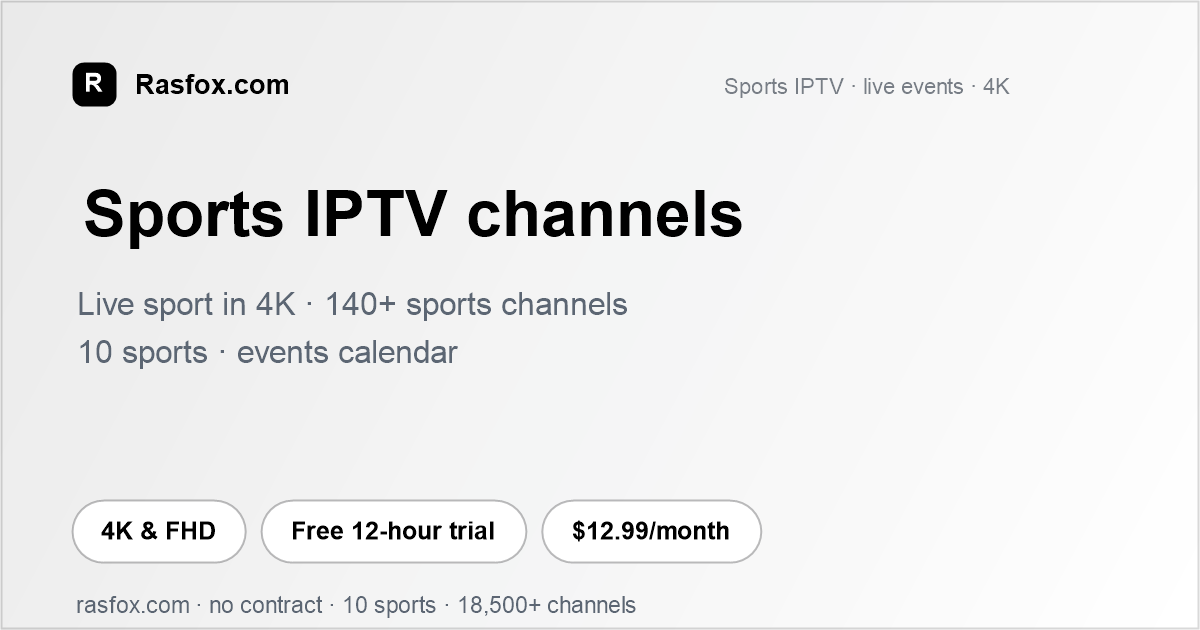
Hosting friends for a big fixture is one of the great joys of food culture — wings, arepas, empanadas, a slow-cooked asado, whatever your tradition is. Cable packages that include premium sports channels get expensive fast, and most of them lock you in for a year or more. An IPTV subscription for game day gives you the same matches, often in higher quality, without the contract. If you're curious how the pricing and channel lineup compare, take a look at what a dedicated sports IPTV for game day package actually includes.
3. Recipes From the Regions You're Watching
Half the fun of following international football is the food that comes with it. A Champions League night calls for something European; a Copa Libertadores evening begs for South American flavours. With tens of thousands of hours of on-demand content and international channels, IPTV quietly becomes a travel channel too — you watch the match, then you cook from the region. Thematic cooking nights basically build themselves.
4. Halftime Is Prep Time
Forty-five minutes is plenty of time to get snacks out, top up drinks, and reset the table. Being able to pause, rewind, or record live coverage means halftime works on your schedule, not the broadcasters'. That single feature has saved more dinner parties than any recipe hack we know.
Built for Sports: The RasFox Advantage for Football-Mad Foodies
Here's the honest truth about IPTV: not all services are equal. Plenty of generic providers treat sports as an afterthought — a handful of channels, constant buffering, and pixelated streams right when the penalty shootout starts. That's why RasFox takes a different approach: total focus on sports channels and live sports events.
The story behind it is genuinely unusual. RasFox grew out of Radio Malena 89.1 FM in Buenos Aires (Venezuela 370) — a station rooted in tango, Argentine culture, and the tradition of bringing people together around a broadcast. Today that same DNA powers an IPTV platform built for lusophone and Latino communities worldwide, with sports as the beating heart of the service.
What you actually get:
- 12,000+ live channels across sports, entertainment, news, and kids' programming
- 40,000+ VOD titles, with sports and 4K content delivered at 50FPS for genuinely smooth motion — no ghosting when the ball is zipping across the box
- 2 simultaneous screens, so one person can watch the match in the living room while someone else streams a cooking show in the kitchen
- No buffering on a stable connection — a must when you're hosting and can't afford a freeze-frame
- No contract, cancel whenever you like
- 24-hour free trial, so you can test it on an actual match day before committing a cent
- Portuguese and Spanish support for anyone who'd rather troubleshoot in their own language
Channel-wise, the lineup is built around the leagues that matter most to its audience: ESPN, DAZN, Fox Sports, beIN Sports, Sky Sports, TNT Sports and Eurosport globally, plus dedicated Latino sports coverage such as TyC Sports, ESPN Premium, TNT Sports Argentina and DirecTV Sports, and lusophone favourites like Globo, SporTV, Premiere and ESPN Brasil.
Competition coverage spans the Premier League, La Liga, Serie A, the Champions League, the Copa Libertadores, the Brasileirão, Liga Argentina, Liga Portugal, plus Formula 1, UFC, NBA and NFL. If your household plans meals around kickoff times, this is the kind of lineup that makes the whole thing work.
IPTV in the United States: What Home Cooks Need to Know
The United States is arguably the most interesting IPTV market in the world right now — and also the most misunderstood.
On the one hand, cord-cutting is mainstream. Millions of households have already ditched traditional cable, and the average American home now juggles a handful of streaming apps that together cost more than the cable bill they replaced. Sports is usually the reason people hesitate: live games have historically been the hardest thing to get without a traditional package.
On the other hand, that's precisely where IPTV shines. English-language sports coverage in the US is fragmented across ESPN, ESPN2, Fox Sports 1, CBS Sports, NBC Sports, beIN Sports, DAZN and TNT Sports, and following international football usually means adding yet another subscription. A single IPTV service consolidates all of it — plus the Latin American and European channels that expat and diaspora families actually want.
And that's a big deal for American kitchens in particular. The US is a country of immigrant food traditions: arepas in Miami, empanadas in New York, feijoada in Boston, tacos al pastor in Los Angeles. Being able to watch your league while cooking your food — that's not a luxury, it's a link home.
Practical considerations for US users:
- Internet speed: 25 Mbps is comfortable for HD; 50 Mbps or more is ideal for 4K streams, especially with two screens running and someone on a video call.
- Devices: Firestick, Android TV, Apple TV, Smart TVs, tablets and phones are all commonly supported.
- Reliability: a wired Ethernet connection beats Wi-Fi for the main screen. Save wireless for the kitchen tablet.
- Budget: most households find IPTV costs a fraction of what a sports-inclusive cable package runs.
Hardware and Setup: Your Kitchen Streaming Checklist
Good news: you probably already own most of what you need. Here's a straightforward setup path for a food-first household.
Step 1 — Pick your screens
- Main TV: the living room or dining area, where guests gather.
- Second screen: a tablet or small kitchen TV mounted under a cabinet or on a shelf near the prep area. This is the one that changes everything.
- Third (optional): your phone for the grill, balcony, or garden.
Step 2 — Choose a device that plays nicely
An Amazon Fire TV Stick, an Android TV box, or a modern Smart TV will handle most IPTV apps without trouble. If you want the smoothest 4K experience with two streams at once, a dedicated Android box with more RAM is worth the small extra spend.
Step 3 — Sort out your network
Streaming and cooking don't mix with buffering. Connect the main TV by cable if you can, keep the router off the floor, and avoid running the microwave and a 4K stream on the same weak circuit — yes, it really can matter. If you want a deeper walkthrough of apps and device compatibility, this guide to setting up live football streaming in 4K at home is a useful starting point.
Step 4 — Test before you commit
Always, always test on a live match day. A free trial is only meaningful if you run it during the busiest hours, with the second screen going and someone streaming music in the background. That's the real-world load test.
Step 5 — Build your game-day routine
Set up favourites, pin the sports channels you actually watch, and pre-programme reminders. Then decide the food. Twenty minutes of prep before kickoff is all a good watch-party menu needs.
Legal vs. Illegal IPTV: Staying Safe While You Stream
This part deserves straight talk, because the IPTV world has a reputation problem — and it's deserved in some corners.
Legal IPTV means the provider has the proper distribution rights or licensing arrangements for the content it carries. Illegal IPTV means a service is redistributing channels without permission, usually at suspiciously low prices, with no company information, no support, and no accountability.
How to tell the difference in practice:
- Red flag: prices that are almost too good to be true, and pressure to pay in crypto or untraceable methods only.
- Red flag: no company details, no contact channel, no trial period.
- Red flag: constant downtime, buffering, and disappearing support when you ask for help.
- Green flag: transparent pricing, a real trial, documented support in your language, and a stable track record.
- Green flag: an actual brand with a history — RasFox's roots in Radio Malena 89.1 FM are a good example of a provider you can trace back to something real.
For a household that just wants reliable sports and a clean conscience, the safe route is a known provider with a free trial and real support. RasFox fits that description: 12,000+ channels, 40,000+ VOD titles in 4K 50FPS, two screens, no buffering on a solid connection, no contract, and a 24-hour free trial you can run during an actual match.
One more practical tip: whatever service you choose, keep it on a separate, well-secured network profile if you're using shared devices, and never hand over payment details to a provider you can't verify.
Final Bite: Feed the Fans, Feed the Family
Cooking and watching live sport have always belonged together. The match is the occasion; the food is the reason people stay. What IPTV does is remove the friction between the two — no more running between rooms, no more missing the goal because you were deglazing a pan, no more paying for 200 channels you'll never open.
A sports-focused service like RasFox gives you the leagues you actually follow, in 4K at 50FPS, on two screens at once, with no contract and no installer visit. Start the 24-hour free trial on a match day, set up a tablet in the kitchen, and pick a recipe that suits the fixture. That's the whole strategy.
Ready to turn your kitchen into the best seat in the house? Head to RasFox and start streaming.
Frequently Asked Questions
Can I really watch live football while I'm cooking?
Yes — and it's one of the most common reasons people switch to IPTV. Because most services allow multiple simultaneous screens and work on tablets and phones, you can run the match on a kitchen device while the main TV shows something else for the rest of the household.
How much internet speed do I need for IPTV in 4K?
Around 25 Mbps handles HD comfortably. For 4K streams at 50FPS with two screens running at the same time, 50 Mbps or higher is recommended. A wired connection to the main TV makes a noticeable difference.
Does RasFox offer a free trial?
Yes. RasFox includes a 24-hour free trial, which is the best way to test stability during a live match before you subscribe. There's no contract, so you're not locked in afterwards.
What sports channels are included?
The lineup covers global names such as ESPN, DAZN, Fox Sports, beIN Sports, Sky Sports, TNT Sports and Eurosport, plus regional sports coverage for Latino and lusophone audiences, including TyC Sports, ESPN Premium, TNT Sports Argentina, DirecTV Sports, Globo, SporTV and ESPN Brasil. Competitions include the Premier League, La Liga, Champions League, Copa Libertadores, Brasileirão, Formula 1, UFC, NBA and NFL.
Is IPTV legal?
IPTV as a technology is completely legal — it's just television delivered over the internet. Legality depends on whether the provider holds the rights to the content it distributes. Always choose a verifiable provider with transparent pricing, real support, and a proper trial period.
How many devices can I use at the same time?
RasFox supports 2 simultaneous screens, which is ideal for a household where one person wants the football and another wants a cooking or entertainment channel.